Kevin Reddington defended Lindsay Clancy by developing a lack-of-criminal-responsibility case through treatment records, injury evidence, reported voices and psychiatric opinions, while challenging the Commonwealth's experts and digital interpretations. During deliberations, he contested the court's juror inquiry and opposed a mistrial without further deliberations or a poll concerning possible partial verdicts.
Defense
Kevin Reddington
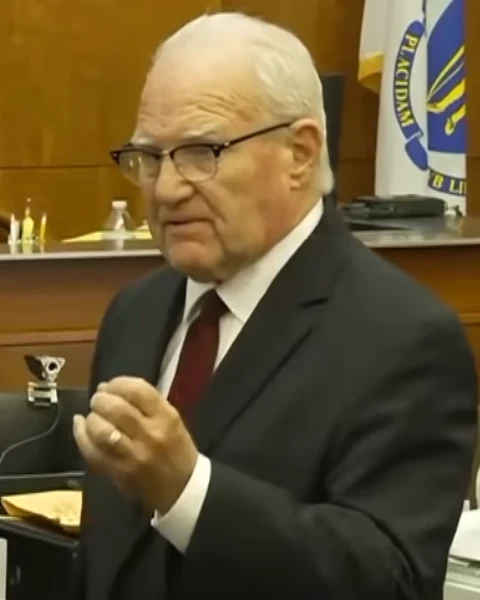
Defense attorney representing Lindsay Clancy.
Appeared2026 Criminal Trial
8,376 lines·151 proceedings·5 mentions
About
Kevin Reddington represented Lindsay Clancy and centered the defense on whether psychosis left her without criminal responsibility. In opening, he disputed a staged suicide attempt and previewed medication and treatment evidence; these were defense assertions, not findings. Through Patrick Clancy's cross-examination and testimony from Lindsay's sister, mother and mother-in-law, he developed accounts of attentive parenting, worsening symptoms and requests for help. Patrick qualified his knowledge of clinical decisions but identified discontinued prescriptions and items police had not seized. The court admitted Susan Clancy's family-message report over objection.
Reddington used injury photographs and emergency-care testimony to challenge the staged-suicide account while testing what individual witnesses had actually observed. Some clinicians could not confirm treatment after transfer or details suggested in his questions. Defense physician Michael Vulfovich described serious injuries but declined to assess intent. Reddington elicited Elizabeth Laposata's explanation of the fall and spinal injuries, then her opinion that elastic ligatures could maintain compression without continuous manual pressure. His forensic questioning distinguished confirmed blood from screening-only or untested stains and challenged reconstruction inferences. Toxicology examinations developed limits on interpreting drug concentrations and counting medications from metabolites, rather than establishing a particular psychiatric effect.
Reddington challenged treating clinicians' information, assessments and prescribing decisions. Alia Goodheart acknowledged missing outside records and limited collateral contact but defended her McLean assessment. Jennifer Tufts faced questions about her experience, civil lawsuit, video appointments, documentation and medication changes. The judge allowed the lawsuit question over objection; Tufts denied negligence and rejected counsel's proposed causal link between the January 23 amitriptyline increase and the deaths. Questions to Rebecca Jollotta and Latiesha Dukes developed serious reported symptoms, help-seeking and communication or knowledge gaps. With Sejal Shah and Jhilam Biswas, he explored functioning during psychosis and the limits of brief hospital encounters, without establishing that those clinicians observed psychosis themselves.
Reddington also challenged interpretations of journals and electronic records. He elicited distress-related journal passages and reviewed mental-health searches and family messages. Kyle Pavao distinguished hyperlink browsing from a direct search for suicide methods and could not identify the computer user. Timothy Chiappini qualified device attribution and photograph metadata; Ian Whiffin explained that phone and watch records could not establish subsequent physical movement or identify who performed searches. Reports and messages were admitted during these examinations, although not every offered item received an admission ruling. Separately, Dan Lawler agreed that an alleged theory of coaching Clancy to report voices lacked an investigative basis and was another trooper's speculation.
The defense examinations separated symptom evidence from criminal-responsibility opinions. Donald Condie discussed postpartum symptoms, medication effects and treatment gaps but had not evaluated criminal responsibility. Reddington elicited supporting opinions from Paul Zeizel and Phillip Resnick, while chaplain Sheila Cavanaugh recounted Clancy's hospital statements about a persistent male voice. The court limited jurors' use of statements made during Resnick's evaluation. On rebuttal, Reddington challenged Avram Mack, Kirk Heilbrun and Gregory Saathoff about postpartum expertise, evaluation timing, compensation, source review and diagnostic reasoning. Mack maintained major depression rather than psychosis, and Heilbrun qualified counsel's proposed link between command hallucinations and inability to conform conduct to law. Acknowledgments that testing did not indicate malingering did not establish that testing verified every account.
Reddington argued that prescription effects supported involuntary-intoxication and involuntary-manslaughter instructions; the judge initially reserved decision. At the later charge conference, the court allowed manslaughter and denied a Bowden instruction. In closing, Reddington combined the treatment, injury, voice-report and digital evidence to seek acquittal based on lack of criminal responsibility, emphasizing the Commonwealth's burden. During deliberations, he sought further inquiry and removal of a juror based on an alleged refusal to apply reasonable doubt. The court declined further inquiry, and he preserved constitutional objections. When the jury reported deadlock, he sought continued deliberations and a poll concerning possible partial verdicts. The court declared a mistrial over the defense's objection.
Trial Record (151)
No proceedings match this filter.