Jennifer Sprague developed the Commonwealth's criminal-responsibility case through treatment, digital and physical evidence and challenges to defense experts. In closing, she conceded mental illness and a genuine suicide attempt but argued that Clancy retained awareness and control, planned the killings and committed first-degree murder.
Prosecution
Jennifer Sprague
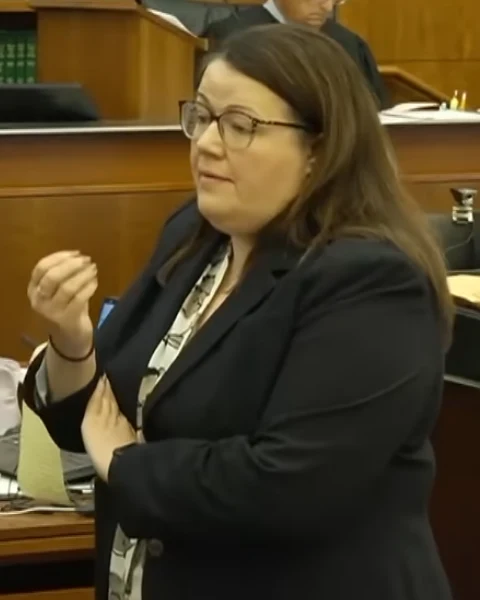
Assistant district attorney representing the Commonwealth in the prosecution of Lindsay Clancy.
Appeared2026 Criminal Trial
5,691 lines·90 proceedings·1 mention
About
Jennifer Sprague developed the Commonwealth's argument that Lindsay Clancy retained criminal responsibility through examinations about her treatment, daily functioning, communications and conduct surrounding the killings. With Patrick Clancy, she contrasted general impressions with specific medication questions, reviewed detailed childcare instructions and emphasized apparent improvement after McLean. Patrick qualified his knowledge of actual doses and computer browsing and clarified that anniversary plans had been canceled. Sprague's examinations of friends and relatives also brought out persistent insomnia, medication difficulties and hopeful messages. On cross-examination, Allison Ozga acknowledged mainly text-based contact; Paula Musgrove explained that a positive January 22 message was encouragement rather than necessarily an observation of improvement.
Sprague presented the emergency and medical sequence through responders, treating physicians and pathologists, connecting scene photographs, resuscitation, oxygen-deprivation injury and autopsy findings. Her questions distinguished assisted ventilation from independent breathing and developed Callan's repeated brain-death testing and the children's causes of death. She also examined witnesses about sample collection, bloodstain patterns and exercise-band and exterior-stain DNA comparisons. Those witnesses qualified what the evidence could establish about contributors, mechanisms, sequence and timing.
Her psychiatric-treatment examinations focused on observed symptoms, medication history and the information available to clinicians. Sejal Shah discussed resolving delirium and decision-making capacity but qualified their significance; Jhilam Biswas reported no observed psychosis during a limited ICU encounter. Jennifer Tufts described repeated assessments without observed psychosis and explained why she did not recommend hospital evaluation on January 23. On redirect, Sprague used an amitriptyline bottle to suggest that Clancy had not taken an increased dose. Tufts accepted that inference conditionally, based on counsel's description. Shah separately distinguished prescriptions from actual medication use and agreed that exercise and organized household activities do not necessarily indicate mania. Following a defense objection, the judge directed Sprague to stop asking Tufts leading questions.
Sprague used computer and phone examinations to develop browsing history, messages and a chronology of calls and activity. Kyle Pavao could not identify the Surface Pro user or confirm her suggested appointment travel time; Ian Whiffin explained that movement records do not identify a phone's carrier. Her physical-evidence challenges addressed Elizabeth Laposata's headfirst-fall reconstruction, strangulation estimates and exercise-band mechanics. Laposata maintained her fall explanation and distinguished ligature from manual strangulation, but agreed that pressure must continue for several minutes after unconsciousness to cause death. She acknowledged that Sprague's demonstrated band arrangement came apart without withdrawing her own opinion. Sprague also renewed an accuracy and foundation objection to defense diagrams; the judge allowed slides four through six and noted the objection.
Sprague challenged the reported command voice through documentation and expert cross-examination. Sheila Cavanaugh acknowledged that her hospital notes omitted voice reports, explaining that chaplain notes were neither verbatim accounts nor clinical evaluations. Phillip Resnick maintained his psychosis opinion despite questions using his writings and treatment records. Three Tewksbury record sections were admitted, while the judge struck a question and answer about killing children rather than having them taken away. In examining Commonwealth experts Kirk Heilbrun and Gregory Saathoff, Sprague distinguished mental illness from awareness of wrongfulness and behavioral control. Heilbrun defended his methods and discussed possible but unconfirmed adverse medication effects. Saathoff cited planning, concealment and control while acknowledging mental illness and a serious suicide attempt. On his redirect, the judge struck an answer about purported malingering guidance.
In her Day 22 closing, Sprague conceded mental illness and genuine suicidal intent but argued that Clancy could distinguish right from wrong and conform her conduct to law. She interpreted pharmacy and restaurant arrangements, calls, stair activity and sustained strangulation as evidence of planning, and sought first-degree murder findings based on deliberate premeditation and extreme atrocity or cruelty. During deliberations, she supported the court's juror questioning and reasonable-doubt reinstruction on Day 27, then opposed further inquiry on Day 28 as an intrusion into deliberations. The judge declined further questioning. After renewed deadlock, the Commonwealth sought a mistrial, and Sprague opposed polling about possible partial verdicts. The court declared a mistrial over the defense's objection.
Trial Record (90)
No proceedings match this filter.