Sherri Crook interpreted bloodstain patterns for the Commonwealth on Day 6, supporting knife contact with a nightstand and a stationary bedside blood source. She also limited what the patterns could establish about timing, blood identification, and how stains around the window formed.
Expert witnessMassachusetts State Police Crime Laboratory
Sherri Crook
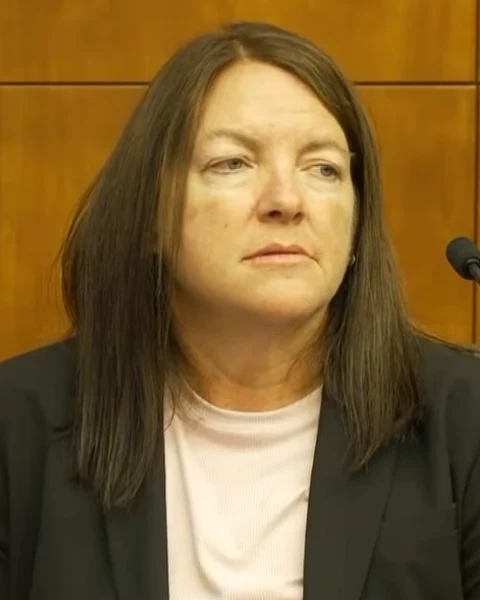
Supervisor of the Crime Scene Response Unit at the Massachusetts State Police Crime Laboratory in Lakeville.
Appeared2026 Criminal Trial
196 lines·5 proceedings·4 mentions
About
Sherri Crook testified for the Commonwealth on Day 6 about bloodstain patterns in the basement, bedroom, and window areas. A supervisor in the Massachusetts State Police Crime Laboratory's Crime Scene Response Unit, she based her analysis on Crime Scene Services photographs and chemist Maureen Hartnett's reports. She distinguished saturation, transfer staining, gravity-driven drips, and smearing.
Crook interpreted a linear nightstand stain as evidence of knife contact followed by movement, but not necessarily the knife's original position. A bedside drip pattern indicated a stationary blood source without establishing how long it remained there. She described contact transfers on windowsills and exterior shingles without identifying the source of the exterior transfers. Mirror stains could reflect angled drips or spatter rather than one established mechanism.
On cross-examination, Kevin Reddington questioned the testing basis and possible causes of the stains. Crook distinguished confirmed blood identification from the inference used in her report and said she did not know whether particular window and bedroom-door stains had been tested. She allowed that window transfers could come from a hand or another bloody object. She agreed that the knife had changed position but declined to identify coagulation or the source of circular stains over the linear stain; mirror staining did not necessarily establish blood cast from a knife.
On redirect, Crook explained that Kastle-Meyer screening identifies possible blood but does not distinguish human from animal blood. Small samples may bypass confirmatory testing to preserve material for DNA analysis. She also accepted hanging out a window and holding on as a possible explanation for the windowsill stains, not an established account. On recross, she said deposition depended on blood quantity and contact, and that a continuous transfer trail down shingles would require continuous contact.
Trial Record (5)
No proceedings match this filter.