Gregory Saathoff testified for the Commonwealth that Lindsay Clancy was criminally responsible, while acknowledging mental illness and a serious suicide attempt. Defense questioning challenged his evaluation methods and interpretation of her reported command voice and elicited concessions about hallucinations and malingering evidence.
Expert witnessUniversity of Virginia; Virginia Department of Corrections; FBI Behavioral Analysis Unit
Gregory Saathoff
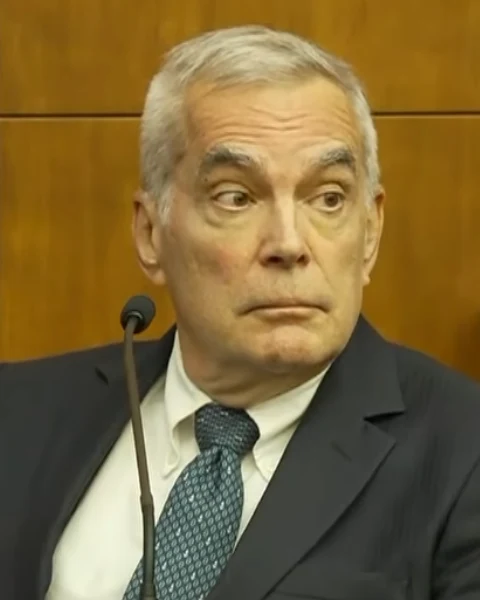
University of Virginia professor and forensic psychiatrist who also works with Virginia corrections patients and the FBI's Behavioral Analysis Unit.
Appeared2026 Criminal Trial
825 lines·9 proceedings·8 mentions
About
Gregory Saathoff testified for the Commonwealth on Day 20 and Day 21 about Lindsay Clancy's mental condition and criminal responsibility. He reviewed extensive records, interviewed her twice by Zoom and interviewed Patrick Clancy. He regarded features of her reported command voice as atypical, including its repetition and abrupt cessation, without saying those features alone made psychosis impossible.
Saathoff concluded that Clancy was criminally responsible on January 24, 2023. He interpreted her errands, timing, concealment and returned telephone call to her husband as evidence of planning and behavioral control. He nevertheless acknowledged a mental disease or defect and a very serious suicide attempt. He favored bipolar II as a clinical diagnosis to caution against SSRI treatment, while acknowledging that her presentation did not fulfill all, or many, of its diagnostic criteria. He distinguished medication side effects from overmedication.
On cross-examination, Kevin Reddington challenged Saathoff's experience, remote evaluation, reliance on records and understanding of postpartum mechanisms. Saathoff agreed that Clancy had sought help and that auditory hallucinations can be internal or external. He acknowledged the absence of malingering indicators in Heilbrun's MMPI results, limiting his truthfulness inference to the test questions, and acknowledged that Resnick found no lying in his examination. He could not initially identify the document supporting part of his account of Aspire hotline calls.
On redirect, Saathoff defended his clinical experience, described Dr. Tufts' prescribing as reasonable and identified Latiesha Dukes' December 8 note as his Aspire source. Sullivan struck his answer about Resnick's purported malingering guidance. After discussing unsuccessful efforts to arrange family interviews, Saathoff acknowledged on recross that he had not considered contacting Reddington or his office about reaching those people. He was then excused.
Trial Record (9)
No proceedings match this filter.